

Hydraulic Filter Manufacturer in China: 7 Questions Heavy Equipment Buyers Should Ask | ZhuoChen
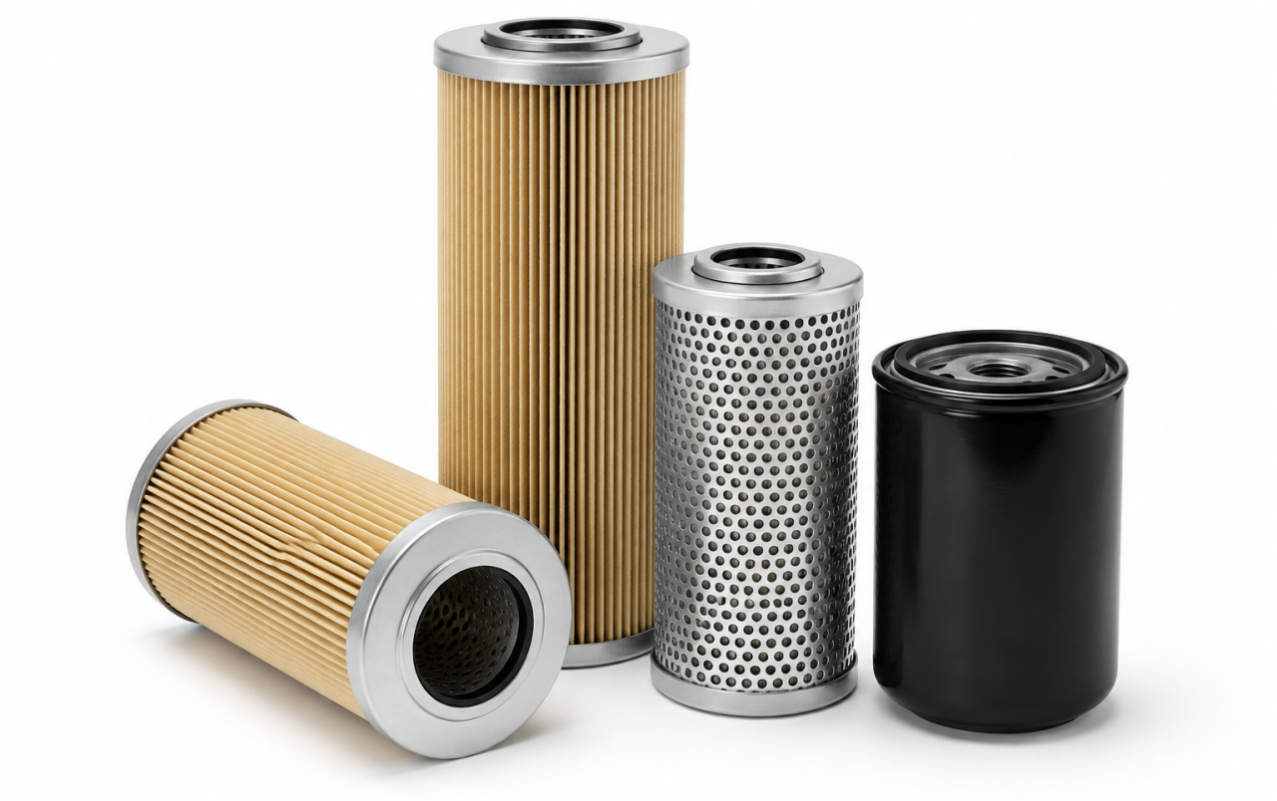
A hydraulic filter can match the outside dimensions of an original part and still be wrong for the machine. An unsuitable efficiency rating, excessive initial differential pressure, an incorrect bypass setting, incompatible seals, or insufficient collapse strength can shorten component life or interrupt lubrication and control flow. Buyers therefore need to qualify both the filter design and the manufacturing process—not only compare price and cross-reference numbers.
The seven questions below turn a supplier discussion into a practical technical review. They are designed for pressure-line, return-line, suction and pilot-circuit filters used in excavators, loaders, cranes, agricultural machinery, mining equipment and industrial hydraulic systems.
Buyer takeaway
A reliable quotation should connect the machine application, hydraulic circuit, drawings, filtration target, validation evidence, production controls and export requirements. If any link is missing, the quoted part may be dimensionally similar but functionally unsuitable.
1. What application data will the manufacturer review before recommending a filter?
A capable hydraulic filter manufacturer should not select a product from an OE number alone. The same outside dimensions may appear in different circuits with very different pressure, flow and cleanliness requirements. Before confirming a cross-reference, ask the supplier to review:
OE or competitor cross-reference number, machine model and engine or equipment variant;
filter location: pressure line, return line, suction line or pilot/control circuit;
normal and maximum flow, working pressure, surge conditions and operating temperature;
hydraulic-fluid type, viscosity range and seal-material requirements;
target cleanliness level, required micron rating and acceptable pressure drop;
bypass-valve setting, anti-drain or other functional features where applicable;
critical dimensions, thread specification, sealing interface and installation clearance.
If some values are unavailable, the manufacturer should clearly identify its assumptions and request a sample, drawing or machine data before production. This is safer than presenting a visual match as a confirmed replacement.
2. How will filtration efficiency and dirt-holding capacity be verified?
“10 micron” is not a complete performance statement. Buyers should ask for the beta ratio at the stated particle size, the corresponding efficiency, dirt-holding capacity and differential-pressure growth. Under ISO 16889:2022, a multi-pass test evaluates how an element removes particles while contaminant is continuously introduced. For example, βx(c) = 200 corresponds to 99.5% efficiency at the stated particle size.
Media should be selected for the circuit and service environment. Glass-fiber or composite media may suit higher-efficiency applications; cellulose can be appropriate for selected cost and duty targets; stainless-steel mesh is useful where cleanability or coarse protection is required. The buyer should request a report linked to the quoted element or media family—not a generic test report for an unrelated filter.
3. Which hydraulic-filter standards and tests should buyers request?
The earlier draft used fuel-filter and water-separation test methods as proof of hydraulic-filter performance. Those methods should be removed. For heavy-equipment hydraulic filters, the relevant evidence depends on filter type and application:
Standard What it helps verify
ISO 16889:2022 Multi-pass method: filtration efficiency, contaminant capacity and differential-pressure behaviour.
ISO 3968:2017 Differential pressure versus flow characteristics of hydraulic filters.
ISO 2941:2009 Collapse/burst pressure rating of a hydraulic filter element.
ISO 2942:2018 Fabrication integrity and first-bubble-point verification.
ISO 2943:1998 Compatibility of element materials with hydraulic fluids.
ISO 3724:2007 Resistance to flow fatigue using particulate contaminant.
ISO 12829:2023 Fatigue and static-burst evaluation of spin-on filter pressure envelopes, where applicable.
These are validation tools, not a promise that every filter must undergo every test in every production batch. The manufacturer should define which tests validate the design and which checks control routine production. ISO 9001 and IATF 16949 are quality-management-system standards; they do not replace product-performance evidence.
4. How does the manufacturer control drawing review and structural compatibility?
For a new or uncertain reference, the engineering review should begin with the customer drawing, an approved sample or reliable application data. The supplier should compare overall dimensions, inner and outer diameters, threads, sealing surfaces, installation height, center-tube support, end-cap construction, media area and any bypass or valve feature.
A practical approval path is: drawing and dimension review → structure and material selection → prototype or first sample → dimensional inspection → required performance validation → signed approval. This reduces the risk of a filter that installs correctly but behaves differently under cold start, pressure surge or a loaded-media condition.
5. What production controls protect consistency under pressure and flow cycles?
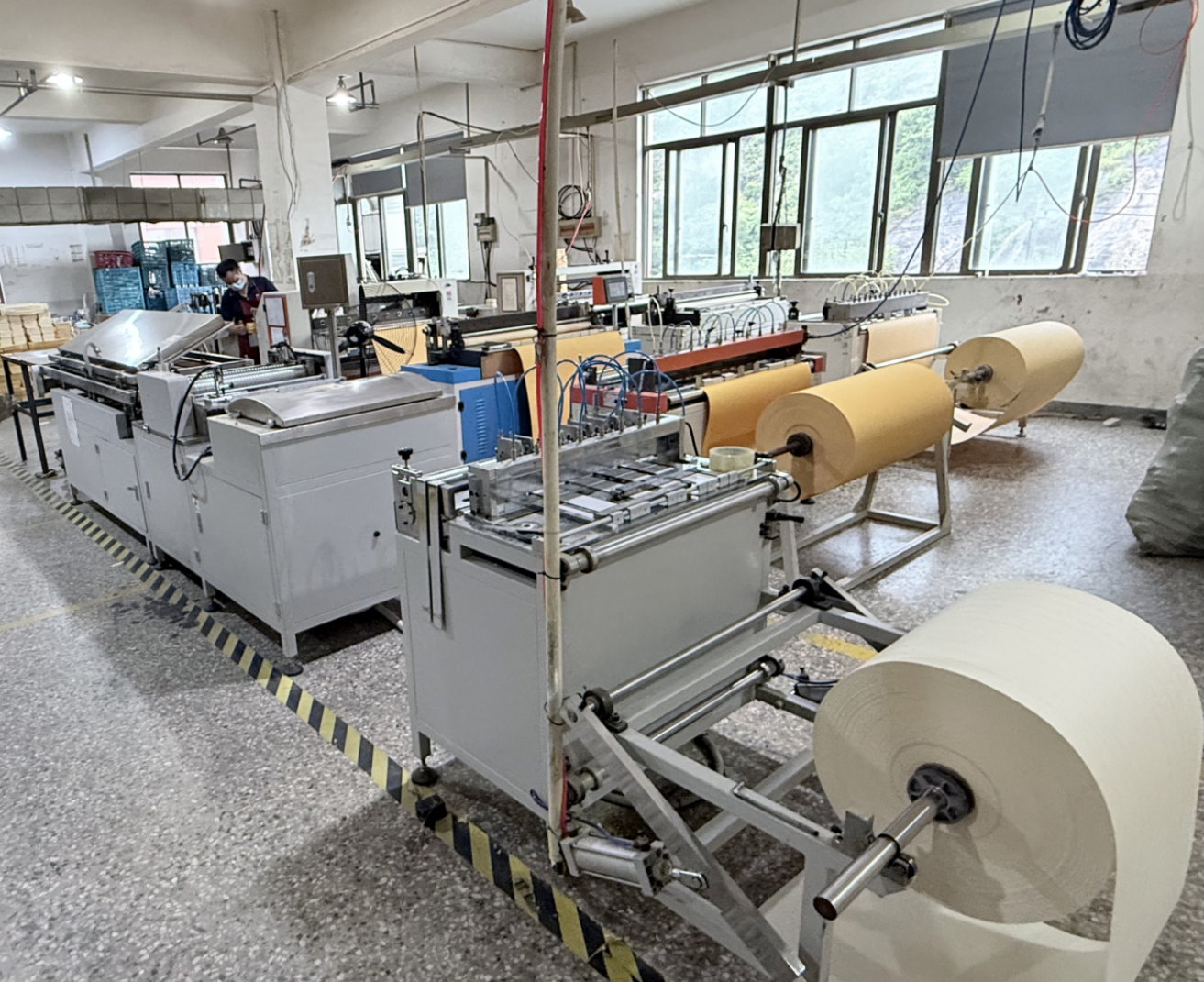
Hydraulic-filter reliability depends on repeatable manufacturing, not only the laboratory result of one sample. During a factory audit or supplier review, buyers should examine controls for incoming media, perforated or expanded metal, end caps, center tubes, adhesives and seals. They should also review pleat height and count, media joining, adhesive mixing and curing, component cleanliness, bypass-valve setting, batch identification and final packaging.
6. Can the supplier support multi-brand, mixed-SKU and OEM/ODM programs?
Heavy-equipment buyers often purchase a broad family of hydraulic references rather than one high-volume item. Ask whether the supplier can manage mixed-SKU orders, long-tail references, private-label packaging, barcodes, cross-reference files, label approvals and consistent revision control. Also confirm the minimum order quantity by item, sample lead time, production lead time and the process for adding a new reference.
7. What factory evidence and export support should buyers request before approval?
Before supplier approval, buyers should connect every capability claim to a document, production site or responsible person. At minimum, request:
the applicable ISO 9001 or IATF 16949 certificate, including legal entity, site address, scope and validity;
the performance report and revision that apply to the quoted filter or media family;
an approved drawing, dimensional inspection report and material specification;
sample approval, traceability, change-control and nonconformance procedures;
capacity, tooling, maintenance and contingency information for the relevant production line;
packaging specification, labeling artwork, MOQ, lead time and mixed-SKU loading plan;
a clear complaint-response process, including containment, root-cause analysis and corrective action.
How ZhuoChen’s affiliated manufacturing structure supports the program
WENZHOU ZHUOCHEN AUTOMOTIVE INDUSTRY CO., LTD. coordinates OEM/ODM development, export communication and customer programs through two affiliated manufacturing companies in Zhejiang. WENZHOU LANGDI AUTO PARTS CO., LTD. manufactures finished filters, while ZHEJIANG ZHONGLI AUTO PARTS TECHNOLOGY CO., LTD. specializes in plastic filter components. They are affiliated companies—not subsidiaries—and the relationship should be stated clearly so buyers understand the production and contracting structure.
Manufacturing footprint Two production bases totaling more than 25,000 m².
Technical portfolio More than 30 utility-model patents across the product and manufacturing portfolio.
Cross-reference coverage 8,000+ cross-reference numbers across the broader filtration range.
Finished-filter capacity 350,000 pieces per month, subject to product mix and schedule.
Plastic-component capability 40+ Haitian injection-moulding machines and capacity of 2,000,000 plastic components per month.
Program support Drawing review, dimensional assessment, structural fit review, OEM/ODM packaging and export coordination.
A simple next step for buyers
Send us 10–20 current, high-volume or difficult-to-source hydraulic-filter references, together with OE numbers, drawings, samples or machine applications. Our team can prepare an initial cross-reference review covering dimensions, structural compatibility, filtration options, MOQ, lead time and OEM packaging requirements before a wider sourcing program is discussed.
Request a hydraulic-filter reference review
Ivan Zhu | Sales Manager
WENZHOU ZHUOCHEN AUTOMOTIVE INDUSTRY CO., LTD.
WhatsApp: +86 139 6880 6352 | Email: salesa@langdiautoparts.com
www.zhuochen-autoparts.com
WENZHOU ZHUOCHEN AUTOMOTIVE INDUSTRY CO.,LTD
WENZHOU ZHUOCHEN AUTOMOTIVE INDUSTRY CO.,LTD
email us here
Legal Disclaimer:
EIN Presswire provides this news content "as is" without warranty of any kind. We do not accept any responsibility or liability for the accuracy, content, images, videos, licenses, completeness, legality, or reliability of the information contained in this article. If you have any complaints or copyright issues related to this article, kindly contact the author above.
